43 minutes in:
Raw milk, eggs, phytoplankton
Lyn Webster a raw milk supplier at Kaitaia Northland Fonterra Number 10173 address Wainui Junction ph 09 4094043
MORE LATER
43 minutes in:
Raw milk, eggs, phytoplankton
Lyn Webster a raw milk supplier at Kaitaia Northland Fonterra Number 10173 address Wainui Junction ph 09 4094043
MORE LATER
Posted in Uncategorized
Dr _________________ you MUST NOT give Brian Bird any more Furosemide or Metoclopramide. Don’t give him anything that I don’t specifically authorise.
Right now I am only authorising you to give him Nattokinase. You should be able to get some from ___________________, if its not readily available for prescription.
You have been robbing Dads body of salt, and you would have killed him but for a massive stroke of good fortune. He was so dehydrated (thanks doctor) that he couldn’t take a crap. ______________ and _____________ were there. So the staff were doing all they could and they gave him a Fleet enema. Just so happened that the enema was a Saline solution and so he slept peacefully and was on the upswing for two days before the salt deprivation came back to start laying him low again.
I took his constipation to be a vitamin C deficiency. And the staff were very helpful seeing to it that he got more of the right juices. But it turned out his problems were more directly related to your assassination combo.
I consider Furosemide particularly, to be a direct assault on my father, no matter who gives it to him. So to me its the exact equivalent of someone beating up my Dad in front of me. I must act accordingly. Now I would normally be very happy to protect a persons professional reputation and would be fine with people making understandable mistakes. But I won’t be thinking about your professional reputation at all if I see my Dad suffering again, and there must not be another pill not authorised by myself, going in his mouth, or I will start acting in the way that you act when your father is being kicked and punched right in front of you.
So its inevitable that there will be tarnishing of your image given my time constraints, and it could get a lot worse for you than that. So you are just going to make sure he takes none of this rubbish, and he gets salt back into his diet, then you will hand the problem to another doctor.
You will say “this is an experiment” in front of _____________, as you prescribe Dad Nattokinase. You might wish to use that phrase two or three times, and somehow this phrase will filter back to me, and I will know you have done the right thing.
Thats when I know that I won’t have to cause a fuss any more.
Don’t write back to me. I’m not interested in talking to you until I hear that phrase filter back to me. This is a monologue not a dialogue. I really don’t want to hear from you and will be furious if I do.
>>>>>>>>>>>>>>>>>>>>>>>>>>>>>>>>>>>>>>>>>>>>>>>>>>>>>>>>>
The Doctor is systematically murdering my father through salt and fluid deprivation. He isn’t being given any salt in his diet, and at the same time he is being forced to take a drug which leaches any remaining salt out of him.
Posted in Uncategorized
They systematically rob Dad of salt in his diet, then they double down on that by giving him Lasix/Furosemide. So there he is ……. low on vitamin C and desperately low on Salt. He almost dies. They give him an enema. The enema is called a
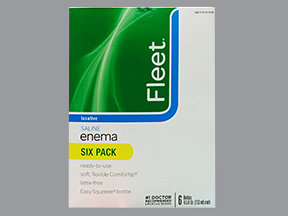
Fleet enema saline solution. So suddenly Dads body is no longer constipated, so he can clear some toxins. And suddenly he has this very small amount of salt in his system. He gets better two days in a row, and starts fading again earlier today(ie 27/6 evening).
He was not real good my last call. Get him some salt first thing in the morning. He won’t last if you use science to systematically rob him of salt. He bounced back slowly now he is falling again. He needs many things but on the face of it he needs to stop this Furosemide rubbish, and get a workup for salt deficiency.
>>>>>>>>>>>>>>>>>>>>>>>>>>>>>>>>>>>>>>>>>>>>>>>>>>
If you look at the pdf for the Fleet enema saline solution its all sodium sodium sodium.
Click to access 2015-PDR-for-Fleet-Saline-Enema.pdf
The way I think about it he may not survive tomorrow if I cannot convince them to help him get more salt. I have to set the alarm to talk to the duty nurse. But I think it will mean staying up all night.
Posted in Uncategorized
I know I can eventually get him out. But I don’t know if I can get him out before they kill him. Don’t let this happen to your family. Find a way to bring down blood pressure. But never ever use a pill to do so. Because the pill can only bring down BLOOD FLOW to the Brain.
Tribute to my Dad stuck in Pill-Land. A never ending vicious cycle of abuse. The cash-flow for the pills then gets stolen off the taxpayer, and used to justify ponzi-debt created by Jews buzzing around the City Of London like locusts. So Dad is just one more victim of the worst mistake in modern human history …. Jewish emancipation.
Here we have the upper limit of achievement in the craft of song-writing. Consider the first eight words to the song.
THE CALIFORNIA AIR
Posted in Uncategorized
I don’t really know why this is such a famous Rolling Stones song. To me its one of their least musical numbers. Perhaps I lack the poets sensibility.
For now I just have to use this as a cheat sheet for when I ring Dad tomorrow. You see they are almost definitely giving him THORAZINE for his hiccups. Thorazine is making Dads hiccups worse not better. Its attacking his heart and his brain as well.
This has been part of the mystery of the situation. Now I understand how the doctors could have cocked it up so badly. Until you find out more about the situation it seems as if the doctors must be suffering from demon possession.
Chlorpromazine is not approved for use in psychotic conditions related to dementia. Chlorpromazine may increase the risk of death in older adults with dementia-related conditions.
“To make sure chlorpromazine is safe for you, tell your doctor if you have:
“What should I avoid while taking Thorazine (chlorpromazine)?
This medicine may impair your thinking or reactions. Be careful if you drive or do anything that requires you to be alert. Avoid getting up too fast from a sitting or lying position, or you may feel dizzy. Get up slowly and steady yourself to prevent a fall….”
“High doses or long-term use of chlorpromazine can cause a serious movement disorder that may not be reversible. Symptoms of this disorder include uncontrollable muscle movements of your lips, tongue, eyes, face, arms, or legs. The longer you take chlorpromazine, the more likely you are to develop a serious movement disorder. The risk of this side effect is higher in women and older adults.”
“What other drugs will affect Thorazine (chlorpromazine)?Taking this medicine with other drugs that make you sleepy can worsen this effect. Ask your doctor before taking chlorpromazine with a sleeping pill, narcotic pain medicine, muscle relaxer, or medicine for anxiety, depression, or seizures.”
The above relevant to zoppiclone.
“Chlorpromazine (CPZ), marketed under the trade names Thorazine and Largactil among others, is an antipsychotic medication.”
“Drugs like chlorpromazine or its related derivatives have been prescribed for chronic hiccups. Some patients also benefit from taking baclofen. All these drugs are to be taken strictly under medical advice and supervision as they have significant side effects when taken for long periods.
The cause of chronic hiccups needs to be meticulously looked for and treated accordingly before taking drugs to suppress them.”
“Chlorpromazine is a very effective antagonist of D2 dopamine receptors and similar receptors, such as D3 and D5. Unlike most other drugs of this genre, it also has a high affinity for D1receptors. Blocking these receptors causes diminished neurotransmitter binding in the forebrain, resulting in many different effects. Dopamine, unable to bind with a receptor, causes a feedback loop that causes dopaminergic neurons to release more dopamine. Therefore, upon first taking the drug, patients will experience an increase in dopaminergic neural activity. Eventually, dopamine production of the neurons will drop substantially and dopamine will be removed from the synaptic cleft. At this point, neural activity decreases greatly; the continual blockade of receptors only compounds this effect.[9]“
“Thorazine is an antipsychotic. It may increase the risk of death when used to treat mental problems caused by dementia in elderly patients. Most of the deaths were linked to heart problems or infection.”
More later.
Posted in Uncategorized
One blood pressure pill and one Tylenol could probably kill my Dad right now. This is like being forced to watch the Titanic, since you already know how the tragedy will unfold. Yesterday Dad was going really well. He had resisted the Indian male nurses attempts to give him drugs which he had no idea about. He ended up taking on an anti-epilepsy drug in the morning and he was doing well. Except he was still a bit hard to talk to since he has no hearing aid with him right now.
Plus he was anxious about staying on the phone long, as others wanted to use it and he was waiting for an incoming call to do with his sky TV. He had not had an attack of hiccups for a few days. There is a good reason for this lack of hiccups. I had been calling him twice a day to try and get him to stay strong in the face of manipulations by the Indian male nurses to drug him up.
The hiccup attacks come when they give him medications to reduce his blood pressure and because they are denying him salt. Which you would think was a basic human right. If you get hiccups you have too much water in your system or too little. So you can cure that by trying a diuretic. The best being a very large cup of green tea.
If that doesn’t do the job what you do is get a big block of pink Himalayan salt, and lick it all day. That will raise your blood pressure, alter your fluid balance the other way ………. and its this direction which Dad needs to go to stop hiccups and have a clear head.

So things had been going moderately well for a few days. But last night another disaster. The male Indian nurse bullshitted him into taking a pill that was supposedly there to reduce the swelling in his ankles. The real deal is that a quack takes his blood pressure every day and then the word goes down the line to reduce it. If Dad falls for this, under any pretence at all, then he will go gaga. He will not be able to walk without falling to the ground. There is not enough hydro-static pressure to pump enough blood to his brain. His voice will be slurred. And he will be inviting hiccups again.
ITS THE OLD SWOLLEN ANKLES TRICK

How could agent Brian have been taken in?
So last night I ring him at 7.10 pm his time. He’s gaga. The staff member hands him the phone and there is no fucking sound at all. She says “Say Hello” and then out comes this pathetic sound of an imbecile. I had been talking to an intelligent man, same time the night before, and a hard of hearing man that morning. Now I was talking to an imbecile. So then I have to get the information out of him. Turns out that they had slipped him another drug, which he could not name, on the grounds of his ankles. The old swollen ankles trickery and Brian had fallen for it. You would think it would at least take a pair of tits and silk suspenders under a tight white nurses outfit to manipulate my poor Dad. But even the Indian lads can do it.
Manipulating Brian to take drugs.

She would make it understandable???
Only one of two types of drugs could have turned Dad into the gaga creature I was talking to. About 4 sleeping pills could have done it. But really what we are talking about is something to reduce his blood pressure.
So he is completely fucked up again. And he will be EVERY TIME that they do this which will be EVERY TIME his blood pressure recovers. This is how you get dementia. This is the cause. Its just a simple matter of hydrostatic pressure. Altitude, pressure in the pipes, and obstruction.
Now I just called Dad again. About 10.40 am his time. He hasn’t recovered. He needed to go to the toilet again, so I couldn’t ascertain if he was still in trouble because of the pill they gave him last night, or if they had given him another cocktail of dementia inducing, liver damaging, poison, this morning. But in any case we have an endless cycle of these guys fucking him up. And what do you know. Thanks to these efforts to bring down his blood pressure he’s got hiccups again.
Indian Medicine Men

Too Sexy For My Dads Health
Now when his blood pressure is down, and he’s got hiccups he cannot resist these troglodytes at all. So this is just intolerable. He’s carrying a sack of fluid above his liver. Unfiltered blood waiting in line for his liver to get it together to process this. Every pill he takes, good or bad (and almost always bad) backs this waiting line up. Blood pressure is required to push this fluid through his liver. So a diuretic or a blood pressure pill can only make this buildup worse WHILE STARVING THE REST OF HIS BODY OF HYDRATION, and setting his brain up for permanent dementia.
They don’t care. They don’t care if he doesn’t know what he is taking. Whats one son-of-a-limey more or less hey? One Tylenol, and one more blood pressure reducer, taken together, could kill him outright. We have to get him out of there. It looked like such a cool place. Aunty Lois could visit him every third day. Cousin Gyneth the same. Always something going on. People visiting. Food laid on. Cute nurses aids. Good non-fluoridated water.
If we cannot get him out of there in six weeks flat we ought to all have our asses whipped, and be sent home to our country of ultimate ethnic origin.
Posted in Uncategorized
If Jews were not calling the shots in Australian economics, how would we go about quickly getting full employment? Getting a manpower scarcity?
From Elsewhere:
Posted in Uncategorized
If you look directly at the wall you get a different viewpoint then if you hover above the neighbourhood. You are correct from the angle you are taking. But consider the history of blood sacrifice. It is an appalling practice in the species generally and particularly strong in Judaism. If the human race could not get over this practice, no ethical society could ever be possible.
The greatest extention of the rebellion against blood sacrifice is “Just War Theory.” This was proposed by Augustine and developed further by Aquinas and Grotius. The Jews have always rejected this body of thought. We see this with their false flag terrorism. But JUST WAR THEORY is still official Christian theology.
Just war theory is the only hope for our species. Yet JWT could never have come out of the Aztecs or directly from the Jews. JWT had to come out of a tradition that was shot through with the Greek concept of LOGOS and attached most emphatically to the idea of NO MORE.
No more blood sacrifice ever. The last human sacrifice had to come from the highest authority …… and not at HIS behest, which would be cruel and hypocritical. The last ethically mandated blood sacrifice had to be OF the highest authority. Then the word had to go out that that’s it “THAT IS IT!!!!!!!” and no more.
Now notice the immense subtlety of the saviour. Though he kept his cards close to his chest, he was playing the longest possible game, and we have the hope that he has saved every one of us. In the sense that we still have the hope that he has saved the human species as a whole.
We can see that his cryptic nature, and esoteric lessons, were the correct approach, when we compare Western civilization to the other so-called Great civilisations. GRAND STRATEGY tells us that little is gained by spelling everything out and being overly obvious.
Up until about the 11th century India was a “Great Civilisation.” China is more than a match for the West in the opinion of many fairminded students of history.
But Just War Theory came directly out of the Christian West. It did not and could not come from another tradition, even if that tradition was superior in many ways. It could never come out of evolution strictly speaking. Because evolution must breed a certain cut-throat evil into the hearts of the intelligent organism. JWT could only come out of something so strange and off-key as the story of the Gospels.
It is for this reason that even a good atheist should see the Saviour of Christianity as his (the atheists) saviour as well. Because the instinct for blood sacrifice is deeply imbedded in DNA or at least our human makeup.
But the saviour, by his actions said “one last time and never again” in a way that could affect people in any era, and could influence individuals at every level of sophistication.
Posted in Uncategorized
Posted in Uncategorized
We would be able to know quite a bit actually. If NASA and the science workers didn’t have so many articles of faith/baggage they keep carrying around.
On Mars there are river-beds still in good condition. So what does this tell us? It tells us that Mars had a thicker atmosphere not long ago. Because only with a thicker atmosphere can you hold liquid water. But it tells us something else as well.
Mars used to have an orbit that was closer to the sun. Or else it would not have had liquid water. So Mars was closer to the sun, which means closer to us, and with a reasonably thick atmosphere and liquid water. So already we know that Mars was closer to the sun, with an atmosphere and liquid water and now we know that Mars is further from the sun, without much of an atmosphere and with no liquid water.
Well what does this tell us? It would tell us quite a lot if the conclusions that come straight out of the above were not considered verbotten by NASA and the science worker/public servants.
Obviously something happened to Mars to:
1. Rob it of most of its atmosphere
2. Boot it out of its current orbit and send it further from the sun.
3. After it was robbed of its atmosphere the water that didn’t freeze under some ground cover evaporated off.
Consequently there will be enormous amounts of water on Mars. But NASA and the public servants don’t want to know. They send a probe to the highlands to look for water and another to the North Pole to look for life remnants. Are they the stupidest people in the world or are they relying on the rest of us to be stupid?
What can cause a planet to be kicked out of its orbit and its atmosphere sucked away? The answer to that is very clear. Only a comet with a nucleus bigger than Mars could have done this. And it had to have happened thousands, rather than millions of years ago or the river beds would not now be in pristine condition.
Every year there are at least two planet-wide windstorms on Mars. This happens because the solid CO2 at each Pole sublimates. Its a really big deal. Particularly the South Pole sublimation. So much friction is created that the temperature of the whole planet briefly warms. There could be dormant plant life that could briefly spring to life under those conditions.
Apart from the bi-yearly windstorms pretty much everything I’m saying goes against the NASA/public servant sacred cows. Real science is interesting and vital to know. Public service science is both boring and suicidal. What do the windstorms tell us?
The windstorms tell us that the most recent trauma that Mars went through is very recent or the river beds would not now be visible.
All the above is clear enough apriori. But to add to that the traumatic events were witnessed and reported to us BY THE ANCIENTS as told to us by Immanuel Velikovsky. Its pretty much an open and shut case.
But NASA and science worker opinion tells us that nothing happens in the solar system apart from asteroids crashing. NASA tells us that comets are snowballs, which is not true and cannot be true. So when we hear about the snowball earth it occurs to no-one that the earth may also have been kicked into a more distant orbit. When we hear about the heat maximum of 55 million years ago it doesn’t occur to anyone that we may have been closer to the sun at one time. The latter occurrence is not so drastic to evade other explanations. But nonetheless it ought to be clear that our orbit does not stay the same all the time. Nor does that of all the other planets except perhaps for Jupiter. Nor was there ever any reason to believe in the NASA/public servant view of the tame solar system.
Mars really does seem to have been through the wars though. Its not a planet that has had just the one recent traumatic event. I would speculate that its violent history has to do with it being close to Jupiter. Thats where all the action is because Jupiters gravitational force means that many of the larger comets coming into the solar system are going to interact with Jupiter. And Mars being a close neighbor is going to cop more than its fair share of trouble.
Other signs of earlier trouble are the fact that one of its sides is more heavily cratered than the other. Couple this fact with the existence of the asteroid belt and we see that Mars was probably the moon of a big planet that exploded a long time ago with its remnant forming the asteroid belt. No other explanation comes close to explaining the cratered side of Mars and the asteroid belt. But the idea of an exploding planet is another idea that NASA and the public servants don’t wish to believe. Or don’t wish the rest of us to believe.
Actually the reality of liquid water on Mars gives us only two options. Mars was closer in and/or mars was the moon of a planet like Saturn. That is to say a planet that gives off vastly more energy than it receives. Other explanations for Mars having liquid water are not available. Much as I would like there to be three or more paradigms to judge in parallel they are just not there to judge.
Van Flandern put the explosion of the planet that Mars used to be a moon of at 65 million years ago. I don’t know how he came up with that. But I suspect it was because of a couple of big asteroids that hit earth during this time period. And thats a pretty reasonable assumption to be making. But its the pristine nature of the river beds that tell us that the latest violence to Mars was very recent.
The record is clear then. All physical evidence on Mars and Venus tells us that Velikovsky was right. And that Carl Sagan, NASA, and those other unscientific pratts were wrong. The ancients reported that a big comet came on in with a companion, interacted with Mars, and also with Earth (on two occasions) and then went on to become the planet Venus.
And this tells us that our species has to get rid of its big governments, its fractional reserve practices, its wars, and its parasitical big-corporatism …………… and we have to start preparing for the next nasty comet that comes through. Or for other disasters. All this also tells us that we have to conquer space in a very big way if we don’t wish to go extinct.
Because while we don’t face quite the hazards that Mars likely faces, still one day we will be caught out. We need our buildings to be stronger on earth. We need to be in more of a survival mode as if we were geared up to face nuclear war by purely defensive means. And we need to have a great deal of our populations in space. Turns out this is easier than we thought. Because there is an immense amount of electrical energy in space which would allow human life to thrive out there.
Also now that we know that Mars had a closer orbit, had water, and had a substantial atmosphere not that long ago, there is really no longer the need to look the other way when we see such clear evidence of our former colonisation of Mars. (Or someone elses former colonisation of Mars.) It wasn’t that very far away. There is no need to pretend that what we see on Mars isn’t the remnants of industrial outposts. Thats what it looks like and we ought to accept the evidence as it stands.
But then thats another idea that NASA and the public servants have an irrational and dogmatic fatwah against.
Posted in Uncategorized
Here is a mainstreamer I have a bit of time for:
Posted in Uncategorized
Our family was always too pseudo-rational. That is to say that the boys were atheistic, and fiendishly logical ………… for any subject that they didn’t have an emotional involvement with. Now a more successful life would have it the other way around. Why not be irrational about ones spiritual life, if that gave you the emotional space to be more rational about dealing with day to day problems?
My brothers took the high road to loser city, except for the one who took advantage of a rigged labour market. And because we are all fundamentally brilliant, given the assistance of a rigged labour market, now he’s a superstar.
Once matters impinge on my brothers emotional territory they all become wall-to-wall morons. So I was tapped out talking to them. I had to take the big step to talk to the nursing staff so that the nightmare happening to my Dad would end. So I was lucky. I got a really sweet Indian FEMALE nurse on the night shift. I explained the whole thing. I think I had her almost in tears. But I made a CHEAT SHEET so that my phone call might be productive. Here is my cheat sheet:
Need to get the salt up, and the pH up. Need to get BLOOD PRESSURE down-but. I said Down-but. You see you need to get blood PRESSURE down in ways that get blood FLOW up. I said blood pressure DOWN in ways that get blood flow UP.
Well what is wrong with a sauna? What is wrong with a Sauna Ron? Plus a sauna press-gangs the skin into the role of assisting the liver in toxin removal. So why not a Sauna? Why not the Indians favourite pimple treatment Ron? The Indians grow up with the awesome elixer called SAFI. Its the best fucking gear imaginable. Its got 28 different medicinal herbs from the subcontinent, brought down into a single syrup. I’ve never seen anything as righteous as SAFI, and all these Indian pricks know about it. If they would stop with the pills and give him the fucking Safi, it would be doing a chunk of the heavy lifting for my Dads liver.
So whats wrong with SAFI and a sauna?
Whats wrong with around the clock vitamin D and vitamin K2 Ron? Why do they need to tell lies to my Dad and blame him for having swollen ankles? Did these boys come all the way from India to lie to my Dad and get angry about his ankles and hurt his heart Ron?
By Christ I wish I was powerful. I would make them a fucking offer they could not refuse. I would tell them to be nice to my Dad and give him Safi, D, K2, Saunas, Apple cider vinegar, liver flushes, and kind conversation. Or else they would find themselves mopping floors in Calcutta, if they aren’t chopped into small pieces and fed to the pigs.
OKAY NOW THIS IS A CHEAT SHEET FOR MY CALL TO THESE NURSES.
1. I was so sad today I almost started crying at work. Because I phoned my Dad. I phoned my Dad and I told him not to take the pills. And for the first time ever he was really sad. He said “They get angry at me about my ankles”
2.They get angry at him, and he gets confused and hurt in the heart. But all they are doing is tricking him into taking a pill that will bring his blood pressure down. They have no pill that can stop the swelling in his ankles. I have herbal treatment that can help, but they won’t let me use it. I have electrical foot massage that can help but they won’t let me use it. But they want to force him to take a pill. So they blame him for his swollen ankles and they act angry at him.
3. Who is his new doctor? What is her name? The doctor is a woman right?
4. Can you give me all the shift times that the nursing staff are on? Its three shifts isn’t it? What hours are the three shifts? I need to talk to all the nursing staff, starting with you, about my Dad. There has been a horrible mistake as to his treatment. He is not getting the care he deserves.
5. No-no. I am going to start at the bottom and work my way up.
6. I will help anyone who helps my father. That is my policy. Anyone wants extra money to send back to India? I am interested. I will hurt anyone who hurts my Dad. That is my policy. I will be angry at anyone who is angry at my Dad. Be nice to him. He’s a nice guy and he’s a smart guy too. You will see if you stop reducing the blood flow to his brain.
7. Do you want me to talk to immigration about some of you nurses? Perhaps I should talk to immigration about some of you Indian nurses. Oh I see. You want my name. Well I will get a pen and paper and take down your name. What do you think about that? I am Brian Birds son. What do you want to know my name for. Are you saying you need to know my name before you will agree to be nice to an 81 year old man? Well go on then. Give me your name and I’ll write it all down. I’ll talk to my pals in immigration if you want. You want to be mopping floors in Calcutta? Would that make you feel better? Would that make you feel happy? If you want to be mopping floors in Calcutta, well alright then I will go and get a pen and paper. But I thought we could come to an agreement that you would be nice to an old guy who never hurt you. Who never hurt you ever.
Who never hurt anyone ever at all.
8.Chlorpromazine, Thorazine, Largactil.
9. You didn’t start studying nursing just to go to the far side of the planet, in order to force pills down an old mans throat, that HE didn’t want, and that HE didn’t need. Why aren’t you giving him SAFI?
10. Don’t saddle up the Doctors for your own behaviour. You have to take responsibility for what YOU-do.
11. Can you tell me the difference between nursing and residential? You see I need to get my Dad to residential so that I can get some sort of treatment to help his liver. The staff won’t help his liver. I need to get him well enough to transfer him over to residential. But he cannot get well enough if the Indian nurses keep forcing him to take pills that reduce blood flow to the brain.
12. Who am I? What is my name? I am Brian Birds son. What is your name? I just told you. I am Brian Birds son. What is your name? Why won’t you tell me your name? I told you who I was. Now I want to know who you are? Okay then. Lets make it even then. Tell me your DADS name. You know my Dads name. You know where my Dad lives. So you tell me your Dads name. You tell me where your Dad lives. So maybe if we equal information we could do the same stuff. So maybe I could go around to your Dads place and be angry at him for having swollen ankles. Then I could lie to YOUR dad that it was his fault that he had swollen ankles. Then I could gang up on him and try to give him a pill, that didn’t help his ankles even a little bit, just because I had fooled him by being angry at his swollen ankles.
So you are from India right? Whereabouts in India are you from? So you came all the way from ……… just to get angry at my Dad for having swollen ankles. Swollen ankles that aren’t my Dads fault but that are the fault of the pills your poxy useless expensive so-called PROFESSION made my Dad take? Well go to India. And try and improve that miserable country with a family of five hiding behind every fucking tree. But don’t come to my part of the world to hurt my Dad. Give my Dad SAFI. Give him the proper stuff. Give him the gear that is going to make him better. This fucking white-guy medicine is just bullshit. You know that, I know that. We all know that. Give him the SAFI since that has all the ayurvedic herbs.
Look you know better. Your ancestors had a civilisation and real medicine when my ancestors were covered in shit and living in trees. So you know the ayurvedic herbs WORK. So why do you come to MY country ….. and force pills that DON’T WORK down my father, by lying to him, and being angry about his swollen ankles?
He’s a good guy. You will learn to love him if you let him have blood-flow to the brain and so he can come back. Treat him like your own Dad. Give him the good stuff. Give him the SAFI. 28 ayurvedic herbs condensed down to a single syrup. It does not get more righteous than that.
Posted in Uncategorized


 A Better World: Graeme Bird For High Office
How is full employment achieved when we get away from thief-economics. When we get away from the economics of the tribe?
G+I+C+X-M equals GDP. But G plus business to business spending plus C plus X-M equals Gross Domestic Revenue. Business to business spending becomes cost of goods sold in the next time period. So if we do all the good things, get people to save, run big surpluses, cut government spending, what happens is profits will fall. This is because profits is total revenue minus cost of goods sold. Consumer spending and Government spending do not become cost of goods sold in the next time period. So reducing them reduces profits in the next time period.
Good policy change leads to low accounting profits. Which is all the more reason why no sole trader should ever have to pay taxes on retained earnings. In a soundly run economy its hard to make a profit. If you doubt the above think of the situation which has prevailed in the US. Record profits for big companies, running neck and neck with depression era employment. Thats what these big deficits and low savings rates produce. They produce huge profits and very few jobs.
Employment is a business expense paid out purely from business-to-business spending. Keynesian policies boost GDP and profits, but reduce employment directly.
To create full employment and upward pressure on wages, we need sole traders to be awash in the producer goods they need to make a profit with. Supposing you have a beekeeper. If he’s got too many hives, too many flowering trees, he grows the timber for a mead-making brewing operation, well he cannot use all these producer goods on his own. There is too much work BECAUSE there are so many producer goods. He’s got to employ people. He cannot do the work himself. So a workers paradise comes out of the retained earnings of a sole traders paradise.
Thats really the secret of it all. Bringing up the density of producer goods so we are struggling to find the people to use them. Now how can this be done, if the sole trader is getting taxed on his retained earnings, and if everyone and his Momma is trying to divert loanable funds into the collection of rental properties? Or indeed loans are going to anything else but durable producer goods? That so much loan money is going into negatively geared rental properties is anti-economic craziness. New houses and major renovations is what the funds ought to go to. Not buying and holding and failing to build.
For us to have a trade surplus we must be able to lend more than we borrow. But how can we lend if we are all jacked up on debt? How can we have the funds to spare to lend overseas, if we are already starved of low interest funds for the sole trader to buy durable producer goods?
So our success comes from what we DON’T lend for. Its not okay to be lending for shiite. The funds have to be applied for wealth creation. Durable producer goods. Not investment in consumer durables, shares, takeovers, gearing up the balance sheet of big corporations to make that balance sheet “less lazy” or any of this other bullshit. This is all pretty obvious stuff.